
A Few Facts about Fertilization
The most important turf expert fertilization tips are:
1. Most soil in Oregon has sufficient phosphorus (P) for grass. So, if you decide to use them, choose fertilizers with zero to low P levels.
2. Weed and Feed is not recommended. It’s actually safer and better to separate fertilization from weed killing. Check out our Downsides of Weed & Feed video for more on this subject.
3. Fertilization in fall (generally September to October) is key to helping your lawn outcompete weeds. Why fall? Soils are already warm, which aids germination, rains are returning, and grass will grow much later in the year than some weeds.
4. Using a slow-release fertilizer is preferred over quick release/liquid types because they last longer and are, therefore, more available for roots to uptake nutrients and are therefore a good investment. Slow release types or compost are also less likely to pollute our water. Conversely, liquid fertilizer is easy to over apply and “burn,” a.k.a. kill, your lawn.
5. For least risk to local streams and rivers, consider organic (natural) sources of fertilizer rather than synthetic. Slow release is recommended at 1 to 2 lbs of Nitrogen (N) per 1,000 sq. ft. to promote lawn density, or skip fertilizing or use compost to maximize water protection.
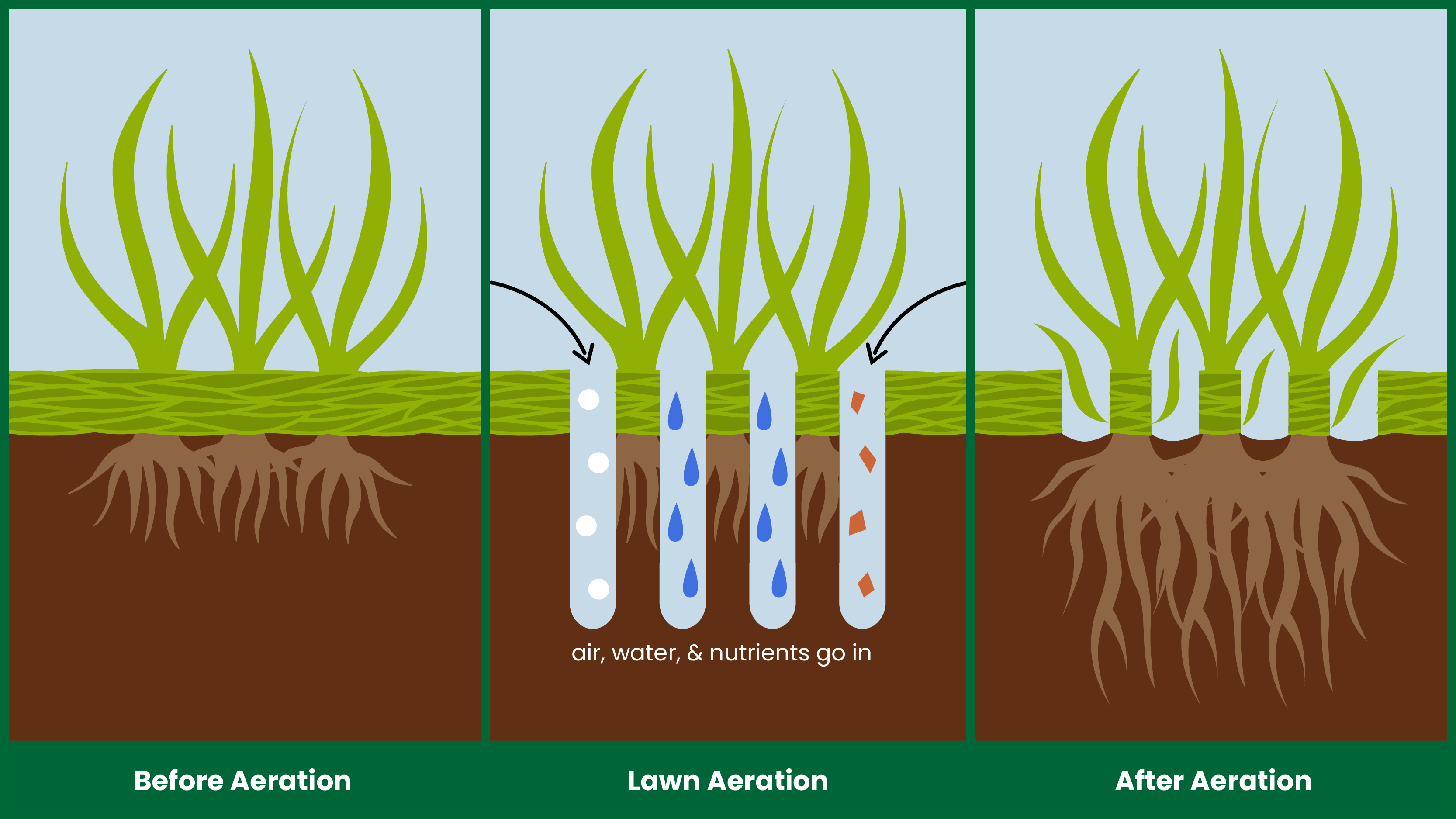
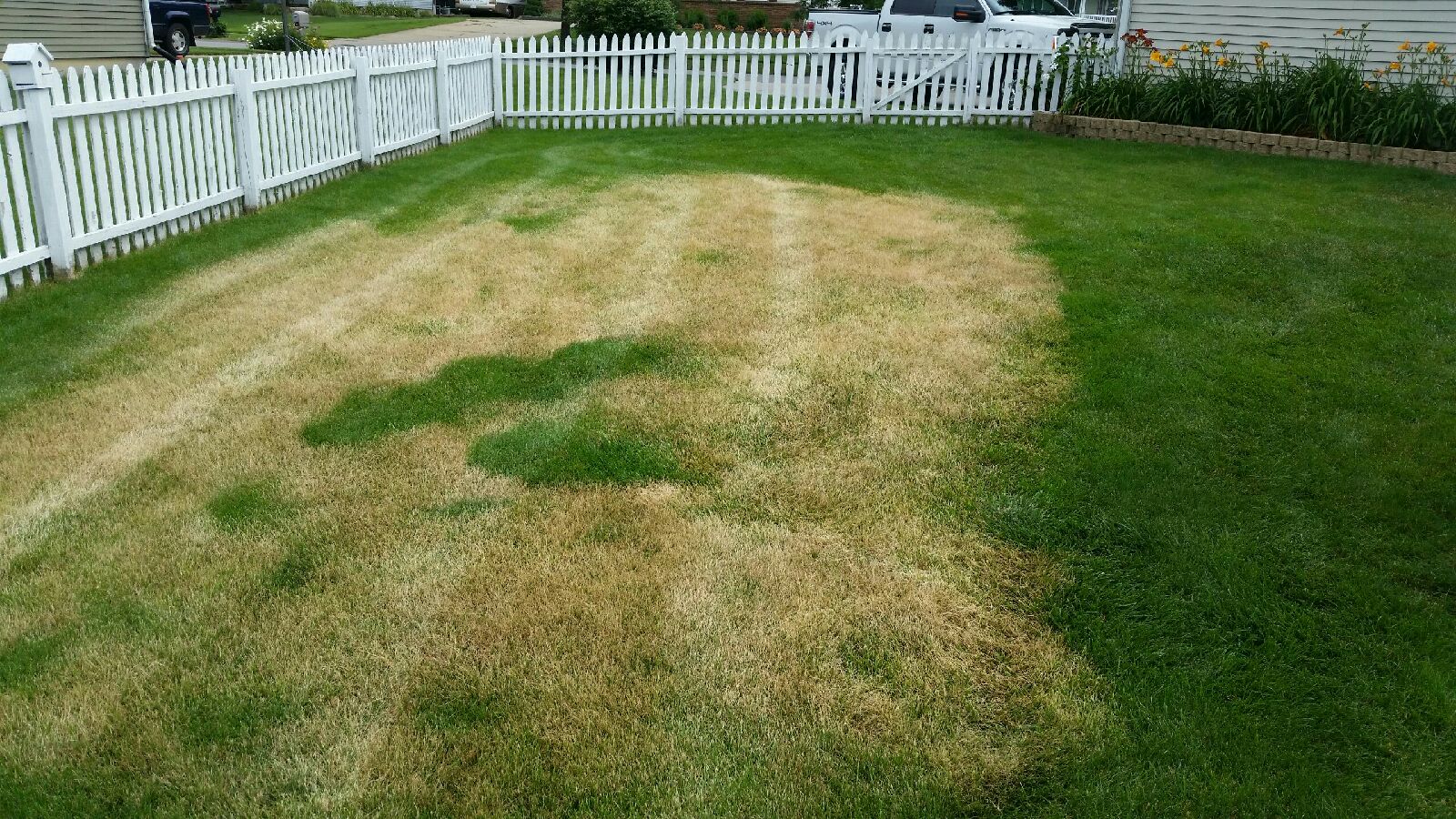
6. If you are looking for the absolute safest bet for adding nitrogen to your lawn, you have options!
- Mulch mowing, which you can do by removing your mower’s bag and making a few extra passes to finely chop up cut grass into small bits. These bits quickly break down and return nitrogen to the soil.
- Adding or allowing clover to remain in your lawn. Clover is what’s called a nitrogen fixer; it pulls nitrogen from the air and sends it to the soil, making it available to the grass roots growing around it.
7. Avoid using pesticides or fertilizers in the summer. Why? Because when temperatures are high, the sun volatilizes pesticides into the air, making them ineffective and bad for our air quality. Also, in the summer heat, grass is more stressed and less able to use nutrients as compared to spring and fall. Fertilizer that goes unused by your lawn can run-off in our waterways and promote harmful algal blooms.
What's the deal with compost?
Turf experts recommend applying compost by raking ¼” across your lawn after you spread seed (overseed) your lawn annually in fall (preferred) and/or spring. Think of compost as a more diluted slow-release fertilizer that also adds beneficial microbes which stimulate soil enzymes. The enzymes in turn enable your soil to transport nutrients to your grass more efficiently. Compost also adds organic matter that assists in breaking up compact clay, helps roots grow deeper, improves moisture retention, and can help level out your lawn. This is why compost is nicknamed “Black Gold”. Try our compost calculator to learn whether you need a few bags or a truckload!
Should I test my soil?
OSU Extension has a guide to soil testing and a list of labs that will provide nutrient and pH results. You can also purchase simple pH testing kits from a hardware or garden store.
https://extension.oregonstate.edu/catalog/pub/em-8677-analytical-laboratories-serving-oregon
https://catalog.extension.oregonstate.edu/sites/catalog/files/project/pdf/ec628.pdf
What about using Iron fertilizer?
Most lawns don’t have iron deficiency, so adding iron is not necessary. If your grass is not growing vigorously, iron will not help. Check your fertilizer label to select a type without iron.
Iron is not a risk-free additive! Iron can cause nearly permanent staining of pavement from runoff. It is also toxic to fish, so keeping it out of our waterways is key. Check out our grass and ground cover all stars guide instead to select the best grass for your needs and light conditions.
Fertilizing and Harmful Algal Blooms (Cyanobacteria)
In urban areas, residential yard care additives are a primary source of nutrients entering surface and groundwater. Excess nutrients combined with heat lead to what has now been labeled harmful algal blooms (HABs) and sometimes called “blue-green algae”. But HABs or blue-green algae is not really a form of algae. It’s a type of bacteria with a bluish-brownish-greenish pea soup consistency that pools on top of water and mimics algae. Its proper name is Cyanobacteria and it generates a toxin to the nervous systems of humans, pets, and livestock.
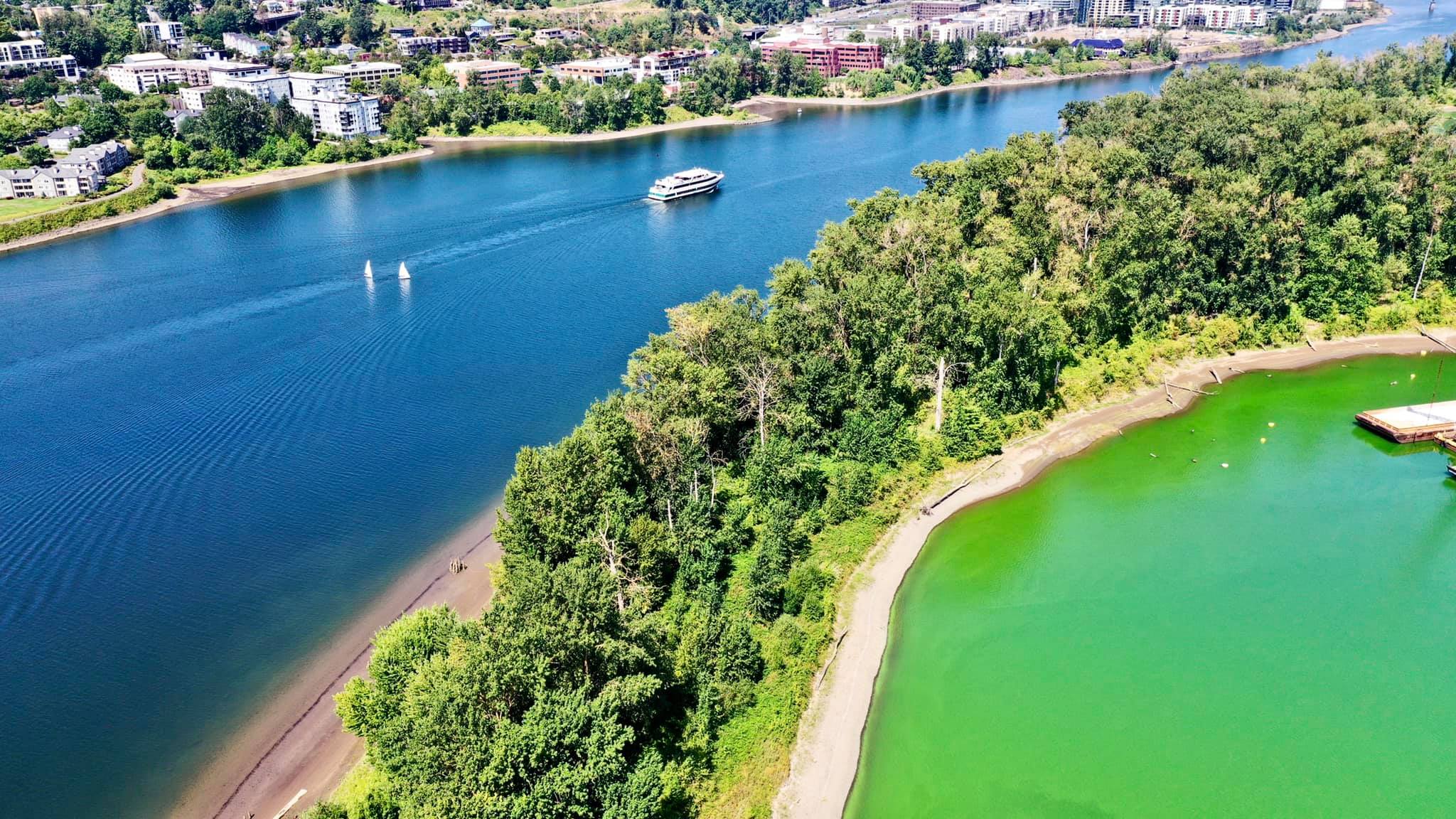
While algal blooms aren’t toxic to humans and land based animals, they still threaten aquatic life because they pull oxygen from water, depriving fish and other aquatic organisms of the oxygenated water they need to survive.
HABs are economically costly because they can clog drinking water intakes meant for humans. They can be fatal to dogs and cause illness in humans if ingested. They also ruin recreational opportunities like boating, paddling, and swimming. Lastly, they can make shellfish dangerous to eat.
Weed Tolerance
Many people believe that a lawn without weeds is perfection. In reality, any farmer will tell you that growing a crop without weeds is difficult and comes at a cost of maintenance hours and often means the use of herbicides or pesticides.
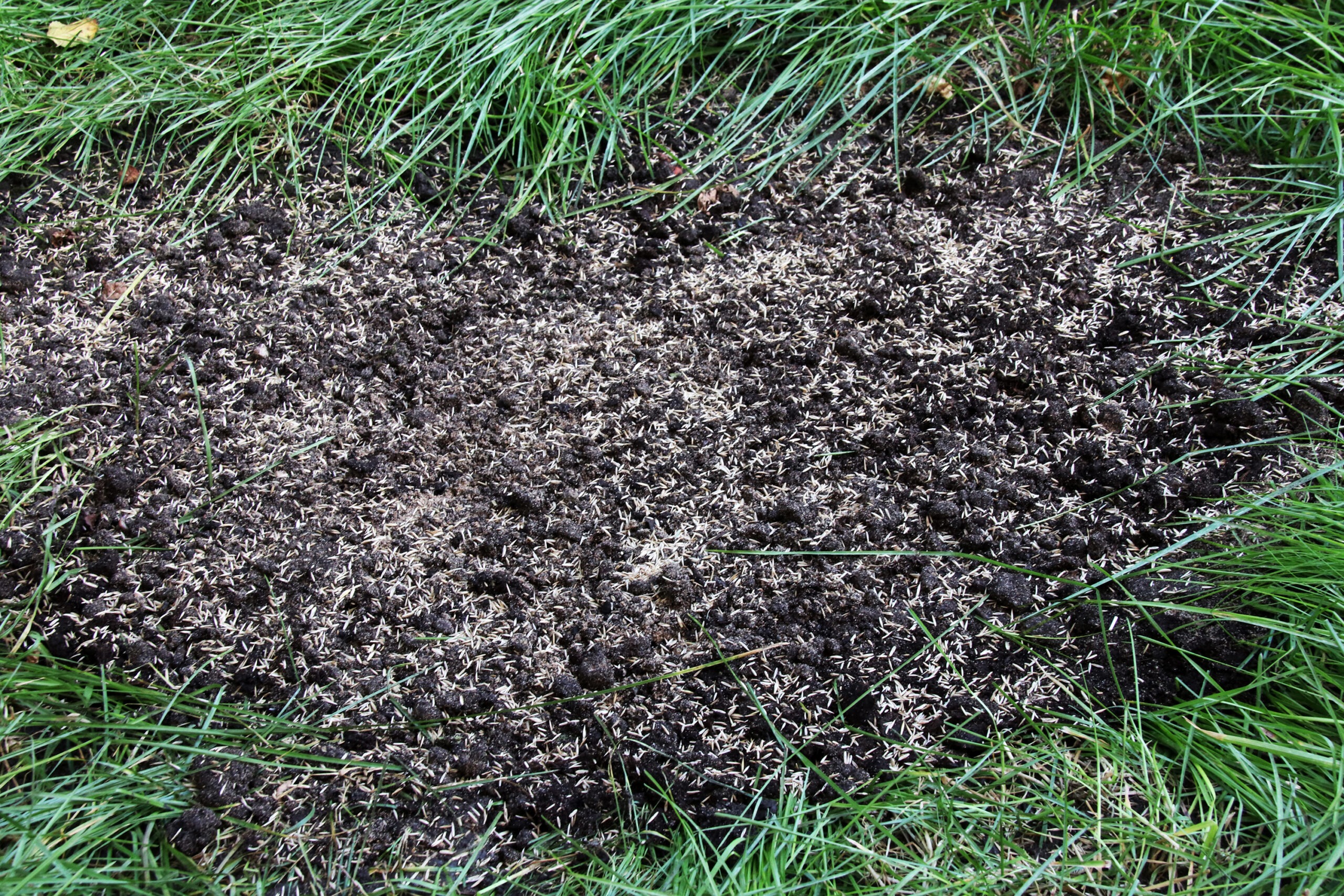
Turf experts’ number one recommendation to bolster your lawn’s ability to outcompete weeds is to, at a minimum, add seed across your lawn annually in fall. This technique, called overseeding, can also be done in spring when soil warms up to 50 degrees or higher (around May). If you are already overseeding but finding that your grass still isn’t vigorous, see our resources on fertilization and our grass type selection guide. It’s good to remember that grass, like other garden crops, needs reseeding since it is continually mowed and cannot easily and naturally reseed itself.
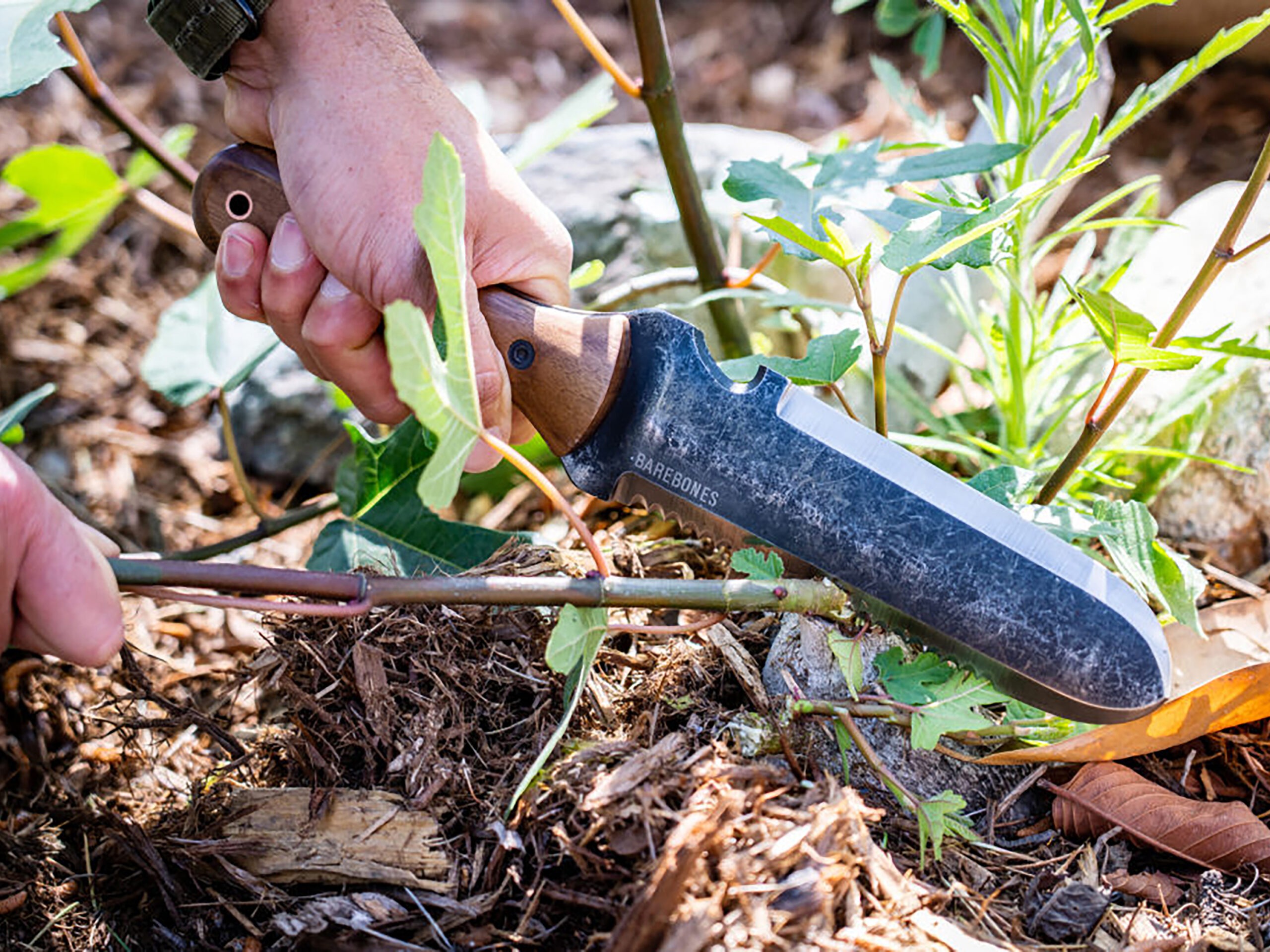
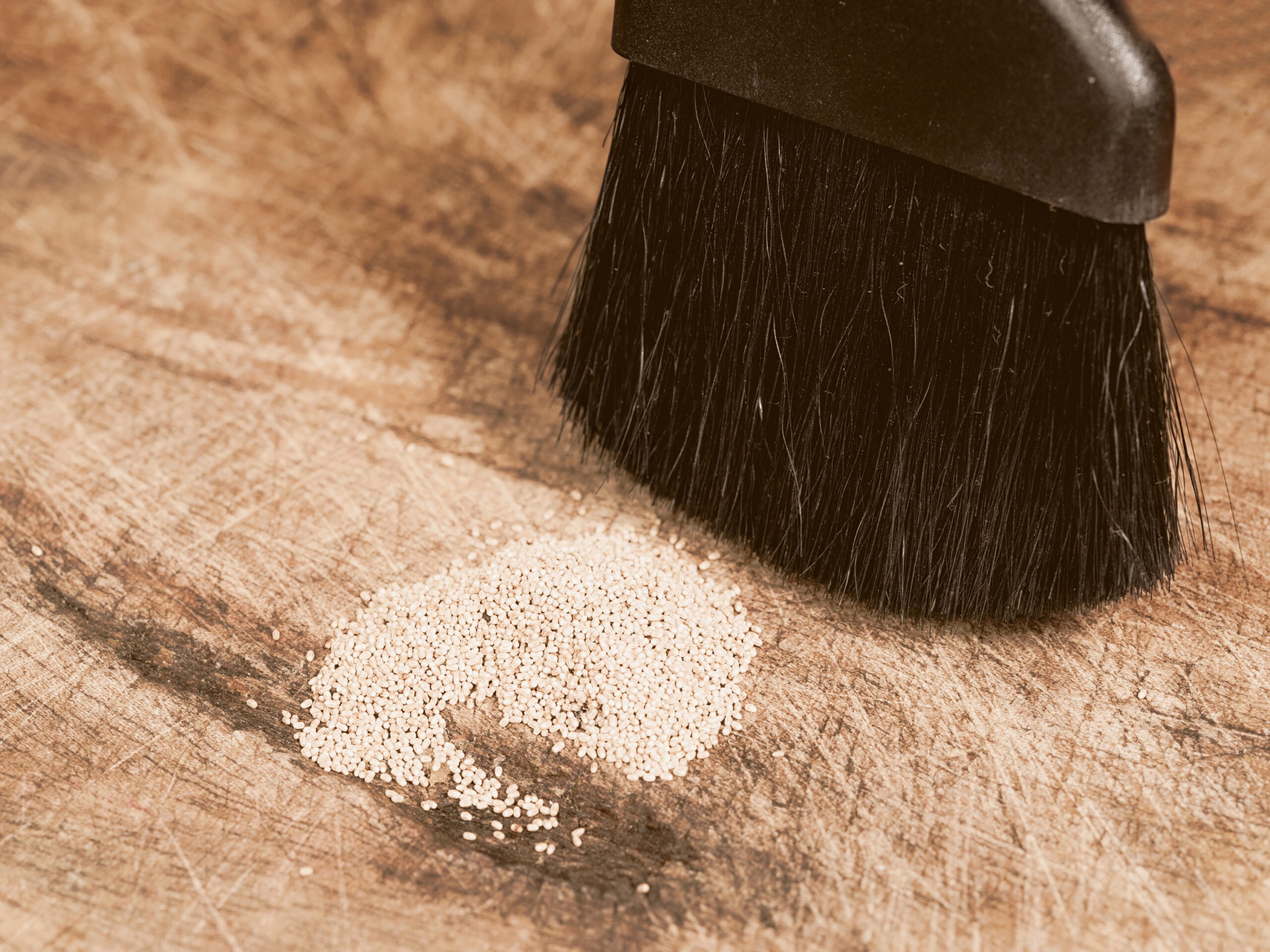
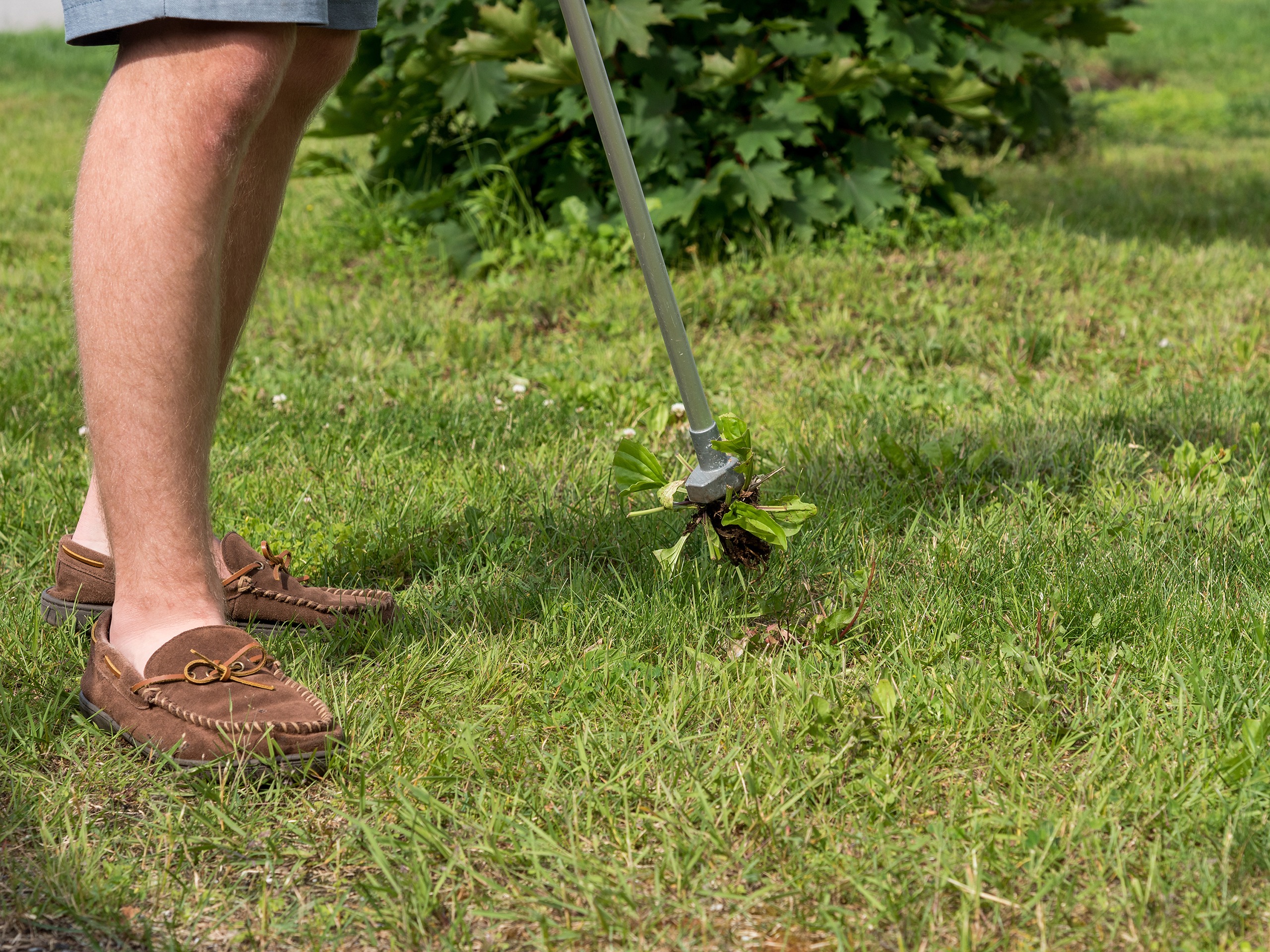
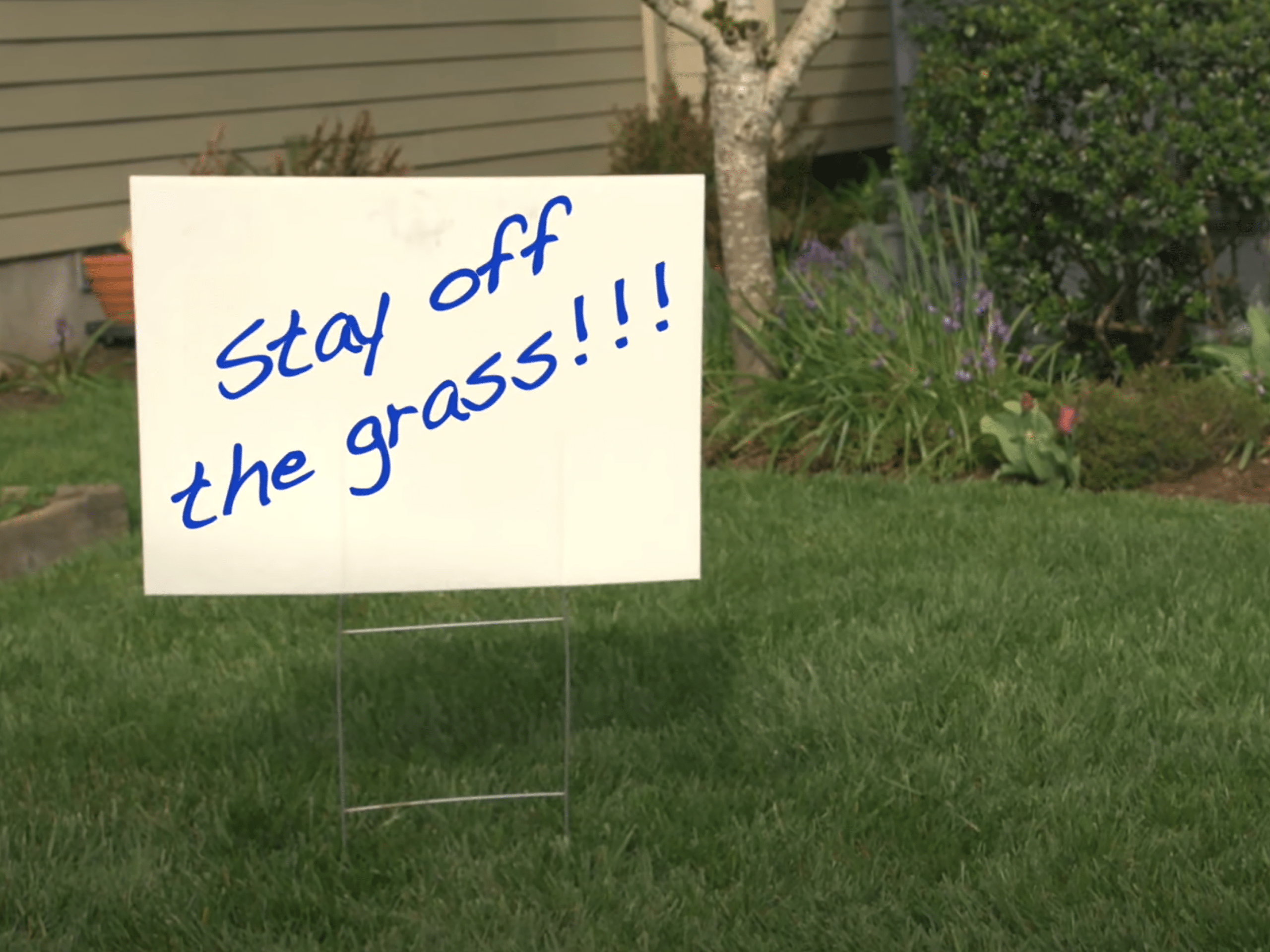
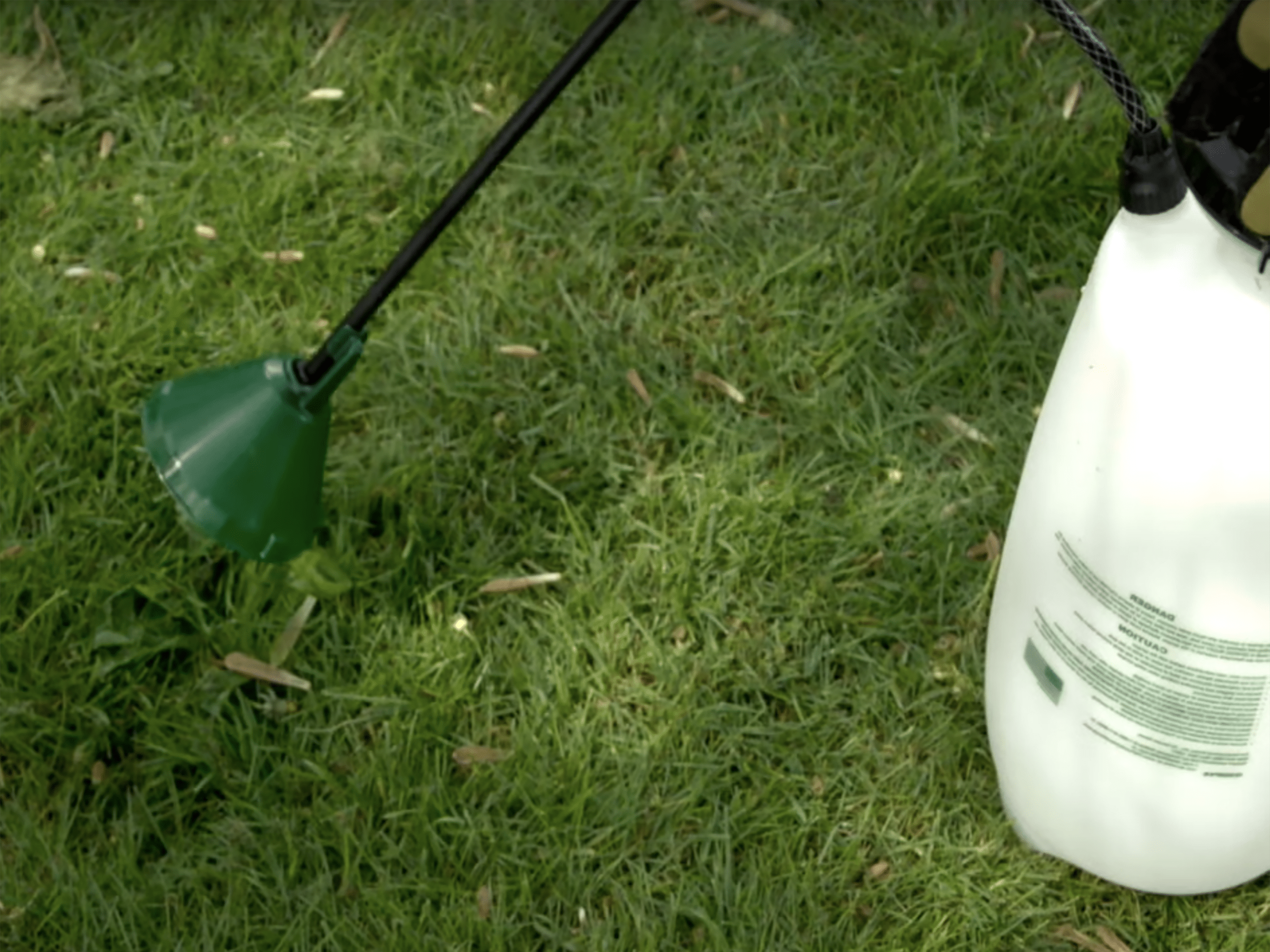
If you use pesticide, spot-spraying using a cone to prevent wind drift is recommended as the least risky application for water and people. Always read the label to ensure safe use (covering skin, keeping kids and pets off for a recommended time frame, avoiding application prior to predicted rain fall, and applying during appropriate outdoor temperatures, etc.). Use caution not to get pesticides on pavement that runs off to the street.